How Odoo ERP Transformed Highseas Shipping Operations
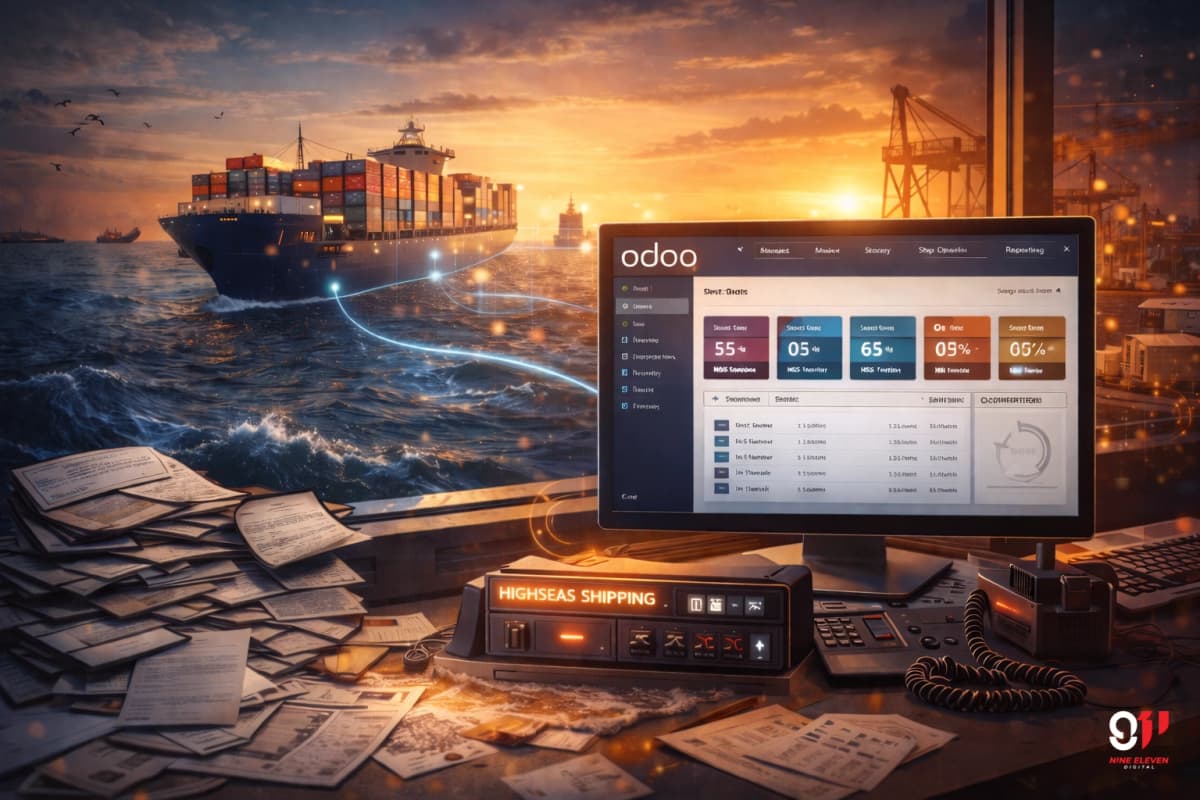
When Highseas Shipping came to 911 Digital, they were drowning in spreadsheets. We built a fully customized Odoo module that transformed their operations with 60% reduction in manual work.
The Challenge
Highseas Shipping faced a critical operational challenge that is common among logistics and freight companies across the Middle East and Egypt: their entire business was running on fragmented spreadsheets, disconnected legacy tools, and manual processes that consumed valuable time and resources. Data silos had formed across every department, meaning the warehouse team, logistics coordinators, and accounting staff were essentially operating in isolation. This fragmentation led to delayed reporting that could take days instead of minutes, persistent inventory mismatches that eroded client trust, and frequent communication breakdowns that resulted in costly shipping errors. The lack of a centralized system meant that management had no real-time visibility into operations, making strategic decision-making nearly impossible. Every month-end close was a painful reconciliation exercise, and customer inquiries about shipment status required manual lookups across multiple systems. These inefficiencies were not just inconveniences — they were directly impacting the company's bottom line, limiting their ability to scale, and putting them at a competitive disadvantage in an increasingly digital shipping and logistics industry. Highseas Shipping recognized that without a comprehensive ERP solution like Odoo, they risked falling further behind competitors who had already embraced digital transformation in their supply chain and operations management workflows.
Our Approach
Our approach to Highseas Shipping's Odoo ERP implementation began with an exhaustive business process analysis that left no workflow unexamined. Our certified Odoo consultants spent two full weeks embedded within the organization, mapping every process across the warehouse, logistics, finance, and customer service departments. We conducted stakeholder interviews, observed daily operations firsthand, and documented over 85 distinct business processes that needed to be digitized or optimized. Based on this deep analysis, our development team designed a fully customized Odoo implementation that went far beyond a standard out-of-the-box deployment. We built tailored modules specifically engineered for maritime shipping operations, including real-time container tracking with GPS integration, automated customs documentation generation, and multi-currency invoicing for international freight clients. The customer management module was enhanced with a shipping-specific CRM that tracked client preferences, shipping routes, and historical pricing agreements. Financial reporting was integrated into a single unified platform, eliminating the need for data transfers between systems and ensuring that every transaction — from booking confirmation to final invoice — flowed seamlessly through the ERP. We also implemented role-based access controls and custom dashboards for each department, ensuring that every team member had exactly the information they needed to perform their duties efficiently. This methodical, consultative approach to Odoo ERP customization in Egypt ensured that the solution fit the business rather than forcing the business to adapt to the software.
Key Results
The results of the Odoo ERP implementation at Highseas Shipping exceeded all initial projections and delivered measurable return on investment within the first quarter of deployment. The 60% reduction in manual work translated to over 120 employee hours saved per week across all departments, allowing staff to redirect their efforts toward strategic initiatives and customer relationship building rather than repetitive data entry tasks. Real-time visibility across all departments meant that for the first time in the company's history, management could view live operational dashboards showing container locations, warehouse capacity, pending invoices, and cash flow projections on a single screen. The automated invoicing system reduced billing cycles from an average of 5 business days to just 4 hours, dramatically improving cash flow and reducing accounts receivable aging. Automated reporting eliminated month-end close delays, with comprehensive financial and operational reports now generated instantly on demand. The unified management dashboard became the nerve center of operations, enabling data-driven decision-making that was previously impossible. The entire Odoo ERP project was delivered in just 12 weeks with minimal disruption to daily business operations, thanks to our phased rollout strategy and comprehensive staff training program that included over 40 hours of hands-on workshops. Client satisfaction scores improved by 35% within the first two months post-implementation, confirming that the digital transformation had a direct positive impact on service quality in the competitive Middle East shipping market.
Lessons Learned & Next Steps
The Highseas Shipping Odoo ERP project provided invaluable lessons that continue to shape our approach to enterprise resource planning implementations across the Middle East and Egypt. The most significant takeaway was the critical importance of thorough process mapping before writing a single line of code or configuring any ERP module. By investing two dedicated weeks in understanding every business workflow, we avoided the costly mid-project scope changes that derail many ERP implementations in the logistics sector. We also learned that early stakeholder buy-in from department managers and end users is essential for smooth adoption — our strategy of involving key users in the design phase resulted in a 95% user adoption rate within the first month of go-live. Another critical lesson was the value of data migration planning, as we developed automated scripts to cleanly transfer five years of historical shipping data into the new Odoo system without any data loss. Looking ahead, Highseas Shipping is now expanding their Odoo ecosystem to include comprehensive HR management modules covering payroll, attendance tracking, and employee performance evaluation, as well as fleet maintenance modules for proactive vehicle and container servicing schedules. They are also exploring Odoo's e-commerce capabilities to offer customers a self-service portal for booking shipments, tracking deliveries, and downloading invoices online. This expansion builds on the solid digital foundation we established together and demonstrates how a well-planned ERP implementation becomes a platform for continuous business growth and digital transformation in the competitive shipping and logistics industry.
Ready to Transform Your Business?
Let's turn these insights into action. Our team of experts is ready to help you grow.