What is Odoo? Complete Beginner Guide for Egyptian Businesses
Everything you need to know about Odoo ERP - what it does, how much it costs, and whether it is right for your business. A plain-language guide for business owners considering their first ERP system.
What is Odoo ERP?
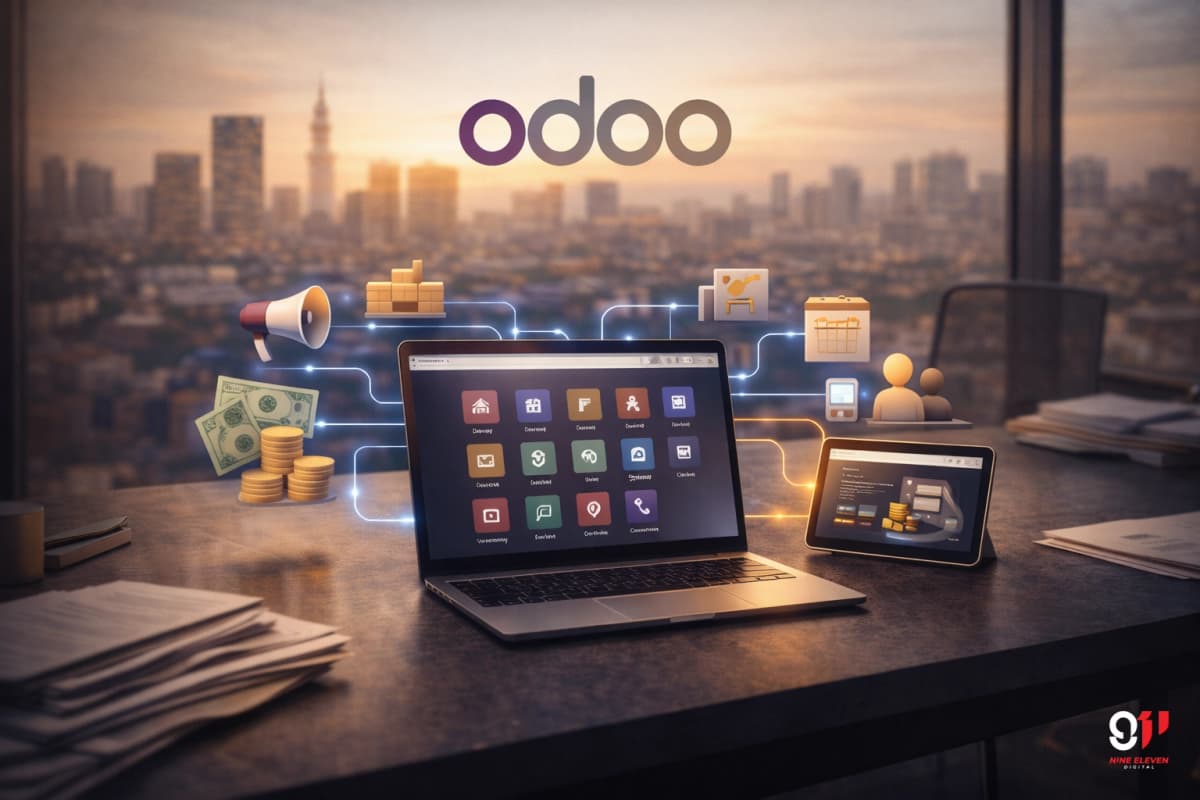
Odoo is an open-source enterprise resource planning (ERP) platform that has revolutionized how businesses manage their operations by integrating every department into a single, unified system. With over 40 official modules covering CRM, accounting, inventory management, human resources, project management, e-commerce, and manufacturing, Odoo offers one of the most comprehensive ERP solutions available on the market today. Unlike traditional ERP systems such as SAP or Oracle, which often require massive upfront investments and lengthy implementation timelines, Odoo provides a modular approach that allows Egyptian businesses to start with the features they need and scale as they grow. The platform supports full Arabic localization, including right-to-left interfaces and Arabic-language reporting, making it particularly well-suited for businesses operating in Egypt and the broader MENA region. Odoo's open-source community edition gives startups and small businesses access to powerful enterprise tools at zero licensing cost, while the enterprise edition adds advanced features like studio customization, multi-company support, and premium integrations. With over 12 million users worldwide and a thriving ecosystem of developers and implementation partners across the Middle East, Odoo has become the ERP of choice for digital transformation initiatives in Egypt. Whether you are running a small trading company in Cairo or a mid-sized manufacturing firm in the 10th of Ramadan City, Odoo ERP can streamline your workflows, reduce operational costs, and provide real-time business intelligence to drive smarter decision-making.
Key Modules for Egyptian Businesses
For Egyptian businesses embarking on their Odoo ERP implementation journey, selecting the right modules is critical to maximizing return on investment and ensuring smooth digital transformation. The Accounting module stands as the cornerstone for most Egyptian companies, offering full compliance with Egyptian tax regulations including VAT calculations, withholding tax management, and the ability to generate tax reports required by the Egyptian Tax Authority (ETA). This module supports multi-currency transactions — essential for import/export businesses — and integrates seamlessly with Egyptian banking systems for automated reconciliation. The Inventory Management module provides real-time stock tracking across multiple warehouses, supports barcode scanning, and offers demand forecasting that helps Egyptian distributors and retailers optimize their supply chains. The Sales and CRM module enables businesses to manage their entire sales pipeline from lead capture to invoice generation, with Arabic-language customer communication templates that resonate with the local market. Purchase Management streamlines vendor relationships, automates purchase orders, and provides spend analytics that help procurement teams negotiate better deals with suppliers. The HR module handles Egyptian labor law compliance, manages employee records, tracks attendance, and processes payroll with Egyptian social insurance calculations. Beyond these essentials, growing Egyptian businesses often benefit from the Manufacturing module for production planning, the Project Management module for service-based companies, and the E-commerce module for businesses expanding their online presence. Each module integrates natively with the others, eliminating data silos and providing a 360-degree view of your business operations across all departments.
How Much Does Odoo Cost?
Understanding the cost structure of Odoo ERP is essential for Egyptian businesses planning their digital transformation budget. Odoo offers two distinct editions: the Community edition, which is completely free and open-source, and the Enterprise edition, which includes premium features and official support. The Community edition provides access to core modules including CRM, sales, purchasing, inventory, and basic accounting — making it an excellent starting point for startups and small businesses in Egypt looking to digitize their operations without significant upfront costs. The Enterprise edition, starting at approximately $24 per user per month when billed annually, adds powerful capabilities such as Odoo Studio for no-code customization, advanced reporting and business intelligence dashboards, IoT integration, quality management, and priority technical support. For Egyptian businesses, the total cost of ownership extends beyond licensing fees to include implementation services, data migration, employee training, and ongoing customization. A basic Odoo implementation for a small Egyptian company with 5-15 users typically ranges from $5,000 to $15,000, covering module configuration, basic customization, and initial training. Mid-sized businesses requiring multi-department integration, custom workflows, and Egyptian tax compliance configurations can expect implementation costs between $15,000 and $50,000. Full enterprise deployments for larger organizations with complex requirements — including multi-branch operations, manufacturing integration, and advanced reporting — may range from $30,000 to over $100,000. When comparing these figures to traditional ERP solutions like SAP Business One or Oracle NetSuite, Odoo typically delivers 40-60% cost savings while providing comparable functionality. Many Egyptian Odoo implementation partners also offer flexible payment plans and phased rollout approaches that help businesses manage cash flow during the transition period.
Is Odoo Right for Your Business?
Determining whether Odoo ERP is the right fit for your Egyptian business requires a careful evaluation of your company's size, complexity, growth trajectory, and specific operational needs. Odoo is ideally suited for growing small and medium enterprises (SMEs) that need an integrated business management system without the prohibitive costs associated with tier-1 ERP solutions like SAP S/4HANA or Oracle ERP Cloud. If your business has between 10 and 500 employees, operates across multiple departments that currently use disconnected software tools, and needs robust Arabic language support for both internal operations and customer-facing communications, Odoo is likely an excellent match. The platform excels for Egyptian trading companies managing complex inventory across multiple warehouses, manufacturing businesses needing production planning and quality control, service companies requiring project management and timesheet tracking, and e-commerce businesses looking for an integrated online store with backend operations. Odoo's modular architecture means you can start with two or three essential modules and progressively add functionality as your business scales — a flexibility that rigid enterprise systems simply cannot offer. The platform's active community in Egypt and the MENA region also ensures access to local implementation expertise, Arabic-language documentation, and industry-specific customizations built for the regional market. However, it is important to recognize Odoo's limitations. Very large enterprises with thousands of users, highly complex legacy system integrations, or industry-specific regulatory requirements (such as banking or telecommunications) may find that tier-1 ERPs offer deeper functionality in those specialized areas. Similarly, businesses with extremely high transaction volumes exceeding millions of records daily may need additional infrastructure optimization. The key decision factors include your current pain points, budget constraints, timeline expectations, and long-term digital transformation roadmap. Consulting with an experienced Odoo partner in Egypt can help you conduct a thorough needs assessment and determine the optimal implementation strategy for your specific business context.
Ready to Transform Your Business?
Let's turn these insights into action. Our team of experts is ready to help you grow.